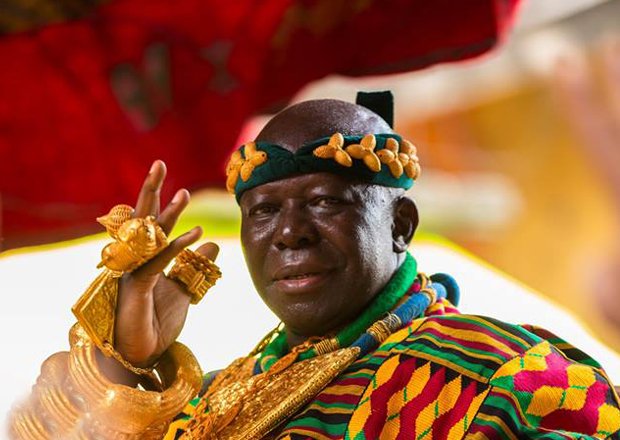
The Asantehene, Otumfuo Osei Tutu II, has firmly opposed proposals to allow queenmothers to participate in formal sittings of the National and Regional Houses of Chiefs, warning that such a move would undermine Asante customs and distort Ghana’s diverse traditional systems.
Speaking at the final 2025 meeting of the Ashanti Regional House of Chiefs on Friday, December 19, the King of the Asante Kingdom made it clear that no authority has the mandate to impose uniform rules on traditional institutions whose customs differ widely across the country.
The opposition follows proposals by the National House of Chiefs, led by Ogyeahoho Yaw Gyebi II, to amend the Chieftaincy Act, 2008 (Act 759). The proposed changes include the creation of a Chamber of Queenmothers and granting them seats during formal deliberations of the Houses of Chiefs, a move supporters say is intended to advance gender equity.
However, Otumfuo described the proposal as a step too far. According to JoyNews Ashanti Regional Correspondent Nana Boakye Yiadom, the Asantehene cautioned that such amendments fail to respect the unique structure of the Asante chieftaincy system.
Addressing the gathering in Twi, Otumfuo acknowledged the indispensable role queenmothers play in traditional governance, particularly within the matrilineal Asante system where they possess the authority to nominate and select chiefs.
“All of us here were chosen by queenmothers,” he noted, stressing that their contribution to the institution of chieftaincy is unquestionable.
Nevertheless, he insisted that tradition clearly defines how that role is exercised. In Asante custom, the Ohemaa is regarded as the custodian and “mother” of the stool, while the chief remains the public representative and spokesperson.
“Our tradition is that queenmothers give counsel behind closed doors,” Otumfuo stated, adding that public deliberation within the House of Chiefs remains the preserve of chiefs alone.
“I will not allow anyone in Ghana to change my culture,” he warned.
The Asantehene also raised concerns about attempts to blend matrilineal and patrilineal systems into a single legal framework, arguing that such an approach could weaken the foundations of customary law rather than strengthen it.
Meanwhile, calls for broader inclusion of queenmothers continue to gain traction nationwide. The All Regions Queenmothers Association, led by Nana Otubea II, has been advocating for representation on the Judicial Committees of the Houses of Chiefs, arguing that disputes involving queenmothers should not be decided exclusively by all-male panels.
Their advocacy has intensified following the passage of the Affirmative Action (Gender Equity) Act, 2024 (Act 1121), which requires at least 30 percent female representation in decision-making bodies.
Legal experts believe the unfolding debate could trigger a constitutional confrontation, particularly between the proposed amendments to Act 759 and Article 270 of the 1992 Constitution, which protects chieftaincy as practised under customary law.
For now, Otumfuo Osei Tutu II has drawn a clear line: while queenmothers remain central to the institution of chieftaincy, the doors of the House of Chiefs will not be opened to alter Asante tradition.