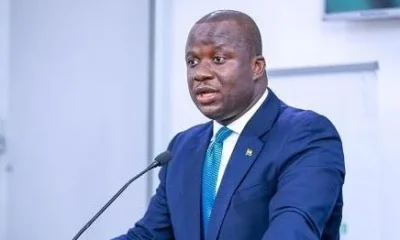
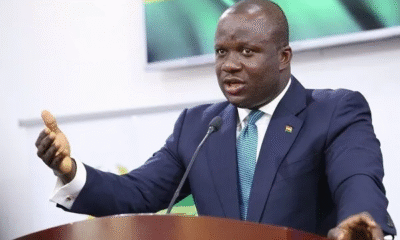
Amid growing political debate over the relevance and performance of the Office of the Special Prosecutor (OSP), former Lands and Natural Resources Minister and Damongo MP Samuel Abu Jinapor has pushed back against claims that the office was imposed by one political tradition.
According to him, the OSP was the product of bipartisan consensus, with support extending to the opposition National Democratic Congress (NDC) at the time of its establishment.
Speaking on Joy FM’s Super Morning Show on Monday, December 22, Mr Abu Jinapor stressed that the narrative suggesting NDC resistance to the creation of the office is inaccurate.
“The NDC did not oppose the establishment of the OSP,” he said, explaining that the parliamentary committee responsible for the bill presented a unanimous report.
He noted that the then Ranking Member on the committee—now Attorney-General Dominic Ayine—publicly supported the establishment of the office during parliamentary deliberations.
Placing the discussion in historical context, Mr Abu Jinapor recalled his role as Deputy Chief of Staff under the Akufo-Addo administration when the OSP was set up. He said the motivation was straightforward: to create a specialised institution solely focused on tackling corruption.
“I was very much involved,” he said. “It was a noble idea — to have an office dedicated to fighting corruption.”
However, the Damongo MP expressed concern that current discussions around the OSP have drifted away from that original intent. In his view, the debate has become overly personalised, making it difficult to conduct a fair assessment of the institution itself.
“I think the conversations about the OSP should be discussed dispassionately, and it should be hard,” he said.
Mr Abu Jinapor argued that scrutiny of the OSP must be rigorous, but grounded in facts rather than emotion or personal attacks. He cautioned against framing the debate around the personality of the current Special Prosecutor, Kissi Agyebeng.
“These conversations shouldn’t be about the person of the Special Prosecutor,” he emphasised.
Instead, he urged stakeholders to evaluate the OSP based on its structure, effectiveness, integration into the justice system, resourcing, and outcomes—the very elements that determine whether an institution can fulfil its mandate.
He concluded by calling on political actors, civil society organisations, and the media to elevate the national conversation, arguing that constructive, institution-focused criticism would better advance accountability and strengthen Ghana’s broader anti-corruption framework.