NEWS
UG Students Alarmed as Provisional Fee Schedule Shows Sharp Hikes


Growing unease has taken hold at the University of Ghana following the release of a provisional fee schedule that signals sharp increases in academic costs ahead of the new academic year.
The figures, which apply to both newly admitted students and continuing cohorts, show average fee hikes exceeding 25 per cent. With only months to prepare, many students say the sudden adjustments have raised serious concerns about affordability and financial planning.
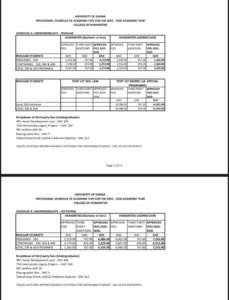
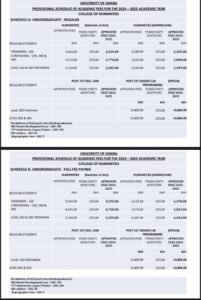
One of the hardest-hit units is the College of Humanities, which hosts the largest population of students at the university. Under the new schedule, Level 100 students in the college are expected to pay GH¢3,110—an increase of 34 per cent from last year’s GH¢2,319. Continuing students in the same college will also see their fees rise by 27 per cent, moving from GH¢1,777 to GH¢2,253.
Similar increases have been recorded at the University of Ghana School of Law. Incoming law students are now required to pay GH¢3,226, up from GH¢2,435 last year, representing a 33 per cent hike. Fees for continuing law students have also increased, climbing from GH¢1,890 to GH¢2,396.
A closer look at the fee structure suggests that rising third-party levies are a major driver of the overall increases. These charges, which stood at GH¢255 last year, have surged to GH¢767 for freshmen—an increase of nearly 200 per cent. Continuing students will now pay GH¢455 in similar levies.
The levies include contributions toward student development and institutional projects, broken down as follows:
-
SRC Hostel Development Levy: GH¢300
-
75th Anniversary Legacy Project: GH¢100
-
Telecel Data Package (Freshers): GH¢312
-
SRC Welfare Dues: GH¢50
-
Reprographic Fees: GH¢5
The upward trend is not limited to the humanities and law faculties. Students in the College of Health Sciences, College of Basic and Applied Sciences, and the College of Education have also reported fee increases ranging between 25 and 35 per cent.
Beyond the figures themselves, the lack of prior communication has become a major source of frustration. Student leaders say the absence of early notice has made it difficult for families to plan and adjust to the new financial demands.
A coalition of student representatives has therefore called on university management to provide clear explanations for the steep increases, warning that the added financial burden could place significant strain on students and their households.