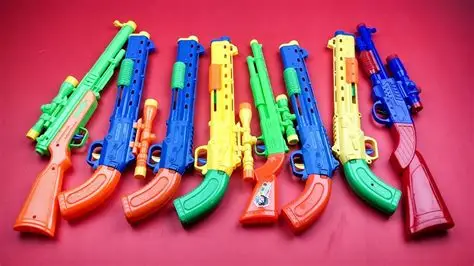
Concerns over the growing normalisation of gun culture among children have prompted a strong warning to parents across Ghana, with authorities urging families to stop buying toy guns for their wards.
The Ghana National Commission on Small Arms and Light Weapons says children who grow up playing with toy guns may begin to view violence as acceptable behaviour, increasing the risk of dangerous encounters with real firearms later in life.
The warning follows a tragic incident in the Amansie Central District of the Ashanti Region that has renewed national debate on children’s exposure to weapons.
On January 23, 2026, police in Bepotenten Sukuum seized a pump-action gun from a 15-year-old boy. When officers instructed the boy to direct the firearm’s owner to report to the police station with the necessary documents, the situation escalated into a violent confrontation, resulting in one death and another person sustaining injuries.
Speaking on Nhyira FM’s Kro Yi Mu Nsem, the Deputy Director of Policy, Planning, Monitoring and Evaluation at the Commission, Mr Gyebi Asante, warned that toy guns can blur the line between harmless play and real-life danger.
According to him, children — particularly boys — who become accustomed to toy guns may develop a false sense of familiarity with real firearms.
“The danger is that if a parent leaves a real gun unsecured, a child who is used to playing with toy guns may mistake it for a toy and handle it,” he explained. “That mistake can have catastrophic consequences.”
Mr Asante appealed to parents to replace toy guns with non-violent alternatives that encourage creativity, learning, and healthy social interaction, stressing that early exposure to violence can shape behaviour well into adulthood.
Beyond parental responsibility, he also highlighted the critical role of licensed gun owners, insisting that firearms must always be stored securely in locked locations inaccessible to children.
He further called on the Ghana Police Service to intensify monitoring of licensed arms dealers, ensuring strict compliance with laws governing the sale of firearms and ammunition.
Mr Asante expressed concern that some licensed dealers operate openly in public spaces, including markets, and sell weapons or ammunition without verifying permits.
“Licensed dealers are supposed to operate private magazines, not display guns openly in communities,” he said. “If a dealer sells a gun or bullet without checking permits and that weapon is used to kill someone, they share responsibility.”
He stressed that enforcing responsible gun ownership, strict dealer regulation, and safer childhood play practices are all essential steps toward reducing gun-related violence and creating safer communities nationwide.