
GENERAL
Ultrasound kills coronavirus, new study finds.


A year into the pandemic, a new study has claimed that coronaviruses, including SARS-COv-2, may be vulnerable to ultrasound vibrations within the frequencies used in medical diagnostic imaging.
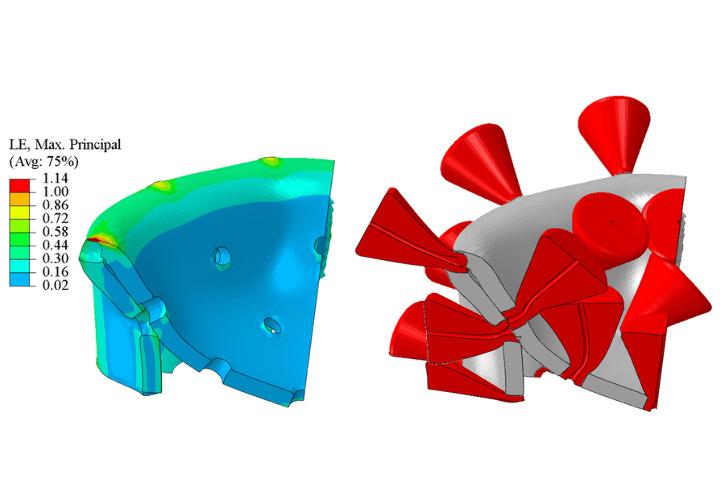
Researchers from Massachusetts Institute of Technology (MIT) in the US modelled the virus’ mechanical response to vibrations across a range of different ultrasound frequencies via computer simulations.
Vibrations between 25 and 100 megahertz caused the shell of the virus to collapse and start to rupture within a fraction of a millisecond, the researchers explained.
Similar effects were observed in simulations of the virus in both air and water.
Though, their results are preliminary and based on limited data, MIT researchers believe that the findings are a first hint at a possible ultrasound-based treatment to fight Covid-19.
Tomasz Wierzbicki, professor of applied mechanics at MIT, said: “We’ve proven that under ultrasound excitation the coronavirus shell and spikes will vibrate, and the amplitude of that vibration will be very large, producing strains that could break certain parts of the virus, doing visible damage to the outer shell and possibly invisible damage to the RNA inside.”
“The hope is that our paper will initiate a discussion across various disciplines.”
Wierzbicki is confident that this elastic model is a good starting point for further research into developing a treatment for Covid-19.