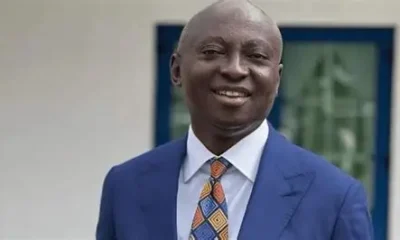
Concerns over political influence in Ghana’s justice system have resurfaced following remarks by former Abuakwa South MP Samuel Atta-Akyea, who insists that democratic governance must be anchored firmly in respect for the rule of law.
Speaking on JoyNews’ AM Show on Friday, January 9, 2026, Atta-Akyea argued that holding political power does not place individuals above legal scrutiny. According to him, democracy collapses when those in authority attempt to shield themselves or their allies from accountability.
He stressed that criminal responsibility does not dissolve upon assuming office, cautioning leaders against confusing political victory with legal immunity. “If you understand the ethos of democracy, don’t interfere with the rule of law,” he said, adding that power does not grant permission to break the law.
Atta-Akyea’s comments were directed at past actions taken by Attorney-General Dr Dominic Ayine, particularly decisions to enter nolle prosequi in cases where accused persons had already been formally charged and brought before competent courts. He described such interventions as disturbing, especially when they coincided with changes in political power.
According to him, the withdrawal of prosecutions under such circumstances creates the perception of selective justice and undermines public confidence in the legal system. He argued that accountability must apply evenly, regardless of party affiliation or timing.
As a senior member of Dr Mahamudu Bawumia’s campaign team, Atta-Akyea stated that an NPP administration under Bawumia would allow legal processes to proceed without interference, even if party members were implicated. In his view, the credibility of governance depends on allowing due process to run its full course.
Addressing whether the controversy stems from weaknesses in the law or the conduct of officeholders, Atta-Akyea maintained that the issue is primarily political. While the law permits the Attorney-General to enter nolle prosequi, he argued that exercising that power in cases involving serious financial implications and ongoing trials reflects political posture rather than legal necessity.
He further warned that the absence of a requirement for the Attorney-General to publicly justify such decisions raises constitutional concerns. According to him, the discretionary nature of the power could eventually face judicial scrutiny.
“I’m sure one of these days it will be tested in the Supreme Court,” he cautioned, questioning whether decisions of such magnitude should rest solely on the discretion of the government and the Attorney-General.