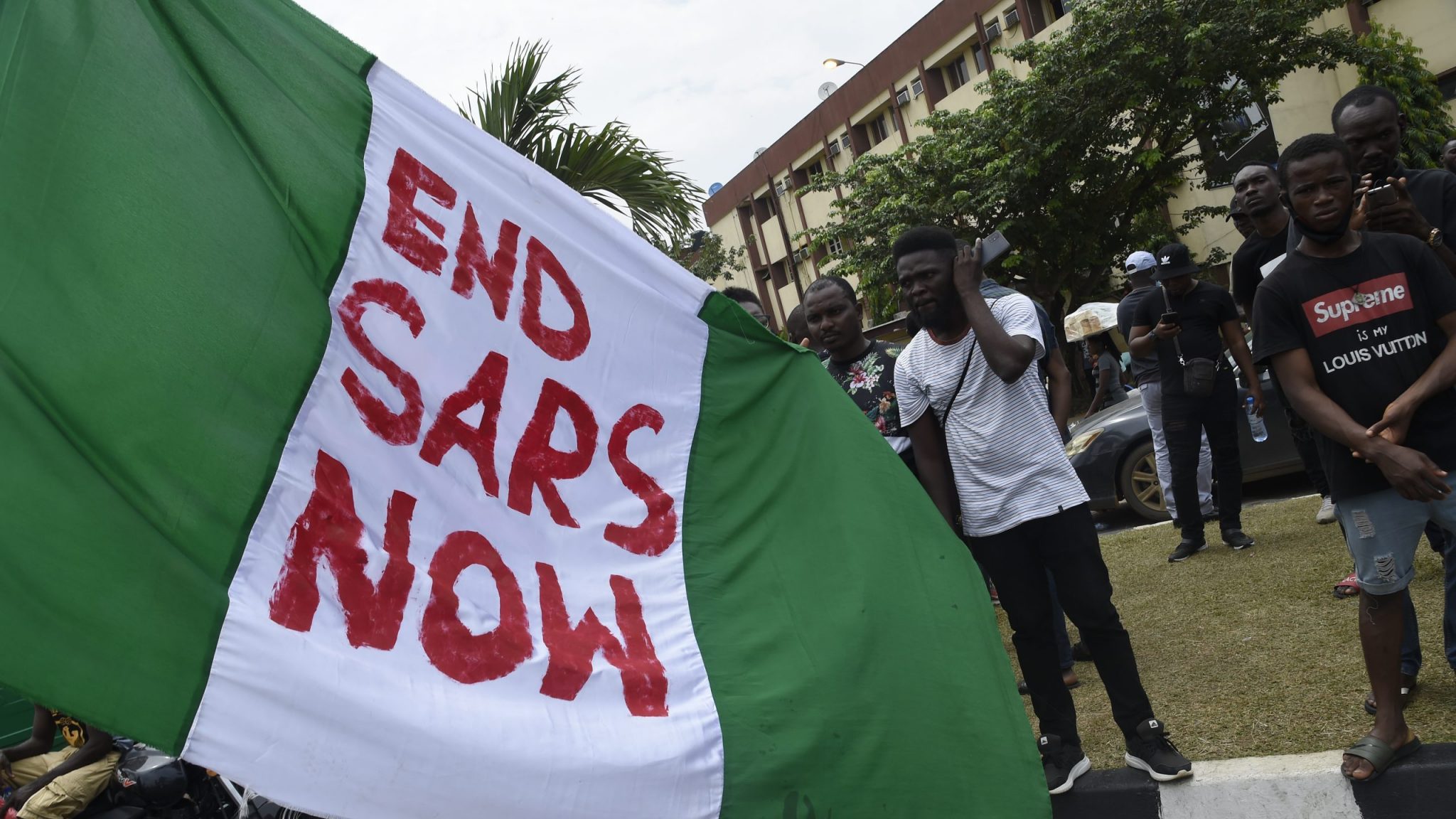
EndSARS protests have been raging in Nigeria for over two weeks.
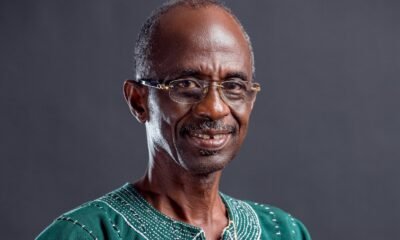
Security analyst, Col (rtd) Festus Aboagye, has said the underlining conditions that triggered the civil protests in Nigeria exist in Ghana, albeit slightly different.
Tens of thousands of Nigerian youth have been taking to the streets for more than two weeks to protest against police brutality.
Mobilising through social media, the youth began staging demonstrations calling for the abolition of the Federal Special Anti-Robbery Squad (SARS), which has long been accused of unlawful arrests, torture, and extrajudicial killings.
There was a violent escalation on October 20, 2020, in Lagos which resulted in multiple deaths and caused many injuries.
Speaking to GhanaWeb over suggestions that the rousing support the Nigerians protestors have received in Ghana points to the possibility of replication in Ghana, Col (rtd) Aboagye said that is not farfetched.
Col Aboagye (rtd), who is attached to the Kofi Annan International Peacekeeping Training Institute (KAIPTC), said in all countries that have faced such agitations, one of the credible generalisations that have been made is that there are some grievances in the system that has long been ignored.
Although the protests in Nigeria target the alleged widespread abuses by Federal Special Anti-Robbery Squad against civilians, it has emerged that protestors want reforms in many other areas of state governance.
Nigerian President, Mahamadu Buhari, for instance, has been accused of packing people from his home state in northern Nigeria into key sectors of government.
Some agitators have also called for reforms in the judiciary and education sector, an end to the State of Origin Requirement, transparency in government business, among others.
“So, you bring all of these to Ghana and you realise that we are not far away from such agitations,” he said.
Col Aboagye (rtd) said what the agitating Nigerian youth are calling ‘Northernisation’ of Buhari’s government, has been labelled the ‘friends and family’ under the current administration.
“Ghana has a similar paradigm and we have been talking about ‘friends and families government’…the ‘Akyem factor’ and we just discuss them…yet there is some empirical evidence to suggest that those who are networked with the government along different lines – it could be ethnicity, it could be along political party lines whatever – get contracts and good jobs…
“When the state now is divided along ethnic lines or party political lines, you are likely to have such tensions,” he said.
He said another reason the threat in Nigeria could replicate in Ghana is the youth bulge in Ghana and the lack of employment.
“The size of the youth per se is not an issue. But the youth haven’t got, cannot find good livelihood…you are likely to have tensions. And in such societies, you find that the disparity between those who have and those who have not is quite steep. You end up with social inequalities,” he said.
He clarified that while these factors are worth taking seriously, criminals or groups of persons who may want to exploit the underlining tensions in the system to suit their interests must also be watched keenly.