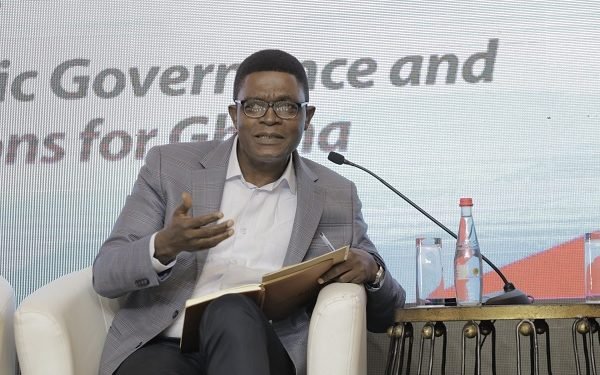
The Institute for Democratic Governance (IDEG) has called on political leaders, civil society organisations, and citizens to work together to resolve a 12-year stalemate on constitutional reforms, warning that continued delays pose a serious risk to Ghana’s democratic stability.
In a statement issued on January 7, to mark Constitution Day and Ghana’s 34th consecutive year of constitutional governance, the policy think tank said the failure to reform the 1992 Constitution has exposed deep structural weaknesses in the country’s democratic system.
IDEG noted that over four electoral cycles—from 2012 to 2025—successive governments have been unable to implement key recommendations arising from constitutional review processes. According to the institute, this persistent inaction stems largely from weak national consensus and the lack of a permanent, independent institutional framework to drive constitutional reform.
“These developments collectively represent a serious threat to Ghana’s democratic consolidation and its reputation as a democratic anchor within the sub-region,” IDEG warned.
The institute highlighted troubling trends, including declining public confidence in multiparty democracy, increasing expressions of support for military rule, and growing youth disillusionment with what many perceive as an unresponsive governance system.
Despite these concerns, IDEG commended President John Dramani Mahama for ensuring the immediate public release of the Constitution Review Committee’s report, describing the move as a positive signal of transparency and a step toward inclusive national dialogue.
According to the think tank, safeguarding Ghana’s democracy requires a shared commitment that goes beyond partisan interests.
“The true defense of Ghana’s democracy lies in collective commitment to good governance, inclusion, justice, and the rejection of divisive politics in favour of nation-building,” the statement said.
IDEG stressed that governments alone cannot build resilient democratic institutions, noting that meaningful reform depends on active citizen participation and sustained political will.
“The challenges we face are too urgent, and the opportunities before us too valuable, for the nation to expend its energy on needless conflict,” the institute added.
The think tank concluded that implementing long-overdue constitutional reforms would help restore public trust, expand civic inclusion, and strengthen institutional accountability. Failure to act decisively, it cautioned, could further erode confidence in democratic institutions—particularly among the youth—thereby endangering Ghana’s long-term political stability.