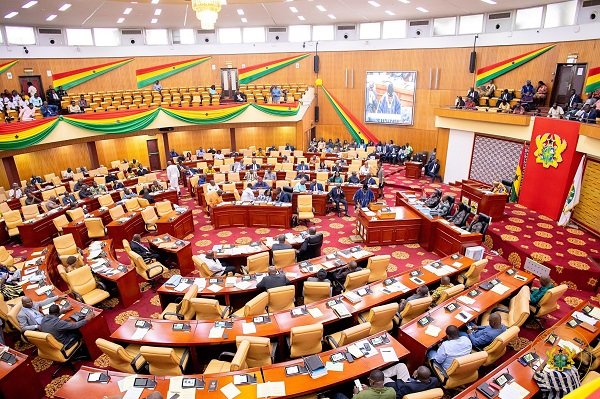
Growing concerns over human trafficking in Ghana have prompted Members of Parliament to demand stronger and more coordinated measures to address the problem, which they describe as both alarming and urgent.
The renewed call came during a capacity-building workshop organised by International Justice Mission (IJM), where lawmakers examined recent data and shared concerns about the rising number of trafficking cases. Participants agreed that without tougher enforcement, improved funding, and effective oversight, efforts to combat the menace will remain inadequate.
Chairman of Parliament’s Human Rights Committee, Ernest Yaw Anim, said the statistics presented at the workshop should serve as a wake-up call for the nation’s leadership.
“The numbers reported are a call to action—from Parliament and from the Executive—on how best we can eradicate and combat trafficking in the country,” he noted.
He stressed that existing penalties may not be strong enough to deter offenders, especially in cases involving children, and urged a review of punishments to ensure they reflect the seriousness of the crime.
Beyond legal reforms, Mr. Anim emphasised Parliament’s responsibility to ensure that anti-trafficking laws are properly enforced. He explained that the newly formed Human Rights Committee will work with other parliamentary committees to tackle funding shortfalls and strengthen enforcement mechanisms. He also indicated that Parliament will push for increased budgetary allocations to agencies responsible for implementing anti-trafficking laws.
While enforcement remains critical, Chairperson of Parliament’s Gender and Children Committee, Helen Adjoa Ntoso, highlighted the social roots of the problem. She pointed to poverty as a major factor driving trafficking and called for investments in education, social protection, and economic empowerment to reduce vulnerability.
“If you don’t want children to go into child labour, you must provide schools and resources,” she said, stressing that improving livelihoods in affected communities could significantly reduce exploitation.
IJM’s National Director of Advocacy and Partnerships, Worlanyor Kojo Forster, acknowledged that Ghana has made progress in recent years, citing increased prosecutions, improved police response, and the adoption of trauma-informed practices within the justice system. However, he warned that these gains are threatened by inadequate funding for victim support.
He revealed that the Human Trafficking Fund received GH¢1 million this year—an amount he described as insufficient to support rehabilitation and reintegration efforts.
“We need between four and five million cedis annually to make the fund fully operational,” he said, adding that some agencies lack basic logistics, including vehicles, to carry out interventions in vulnerable communities.
Human trafficking continues to affect many parts of Ghana, particularly women and children who are subjected to forced labour and other forms of exploitation. Lawmakers believe that stronger collaboration among government agencies, civil society, and international partners will be crucial in reducing the practice and protecting vulnerable populations.