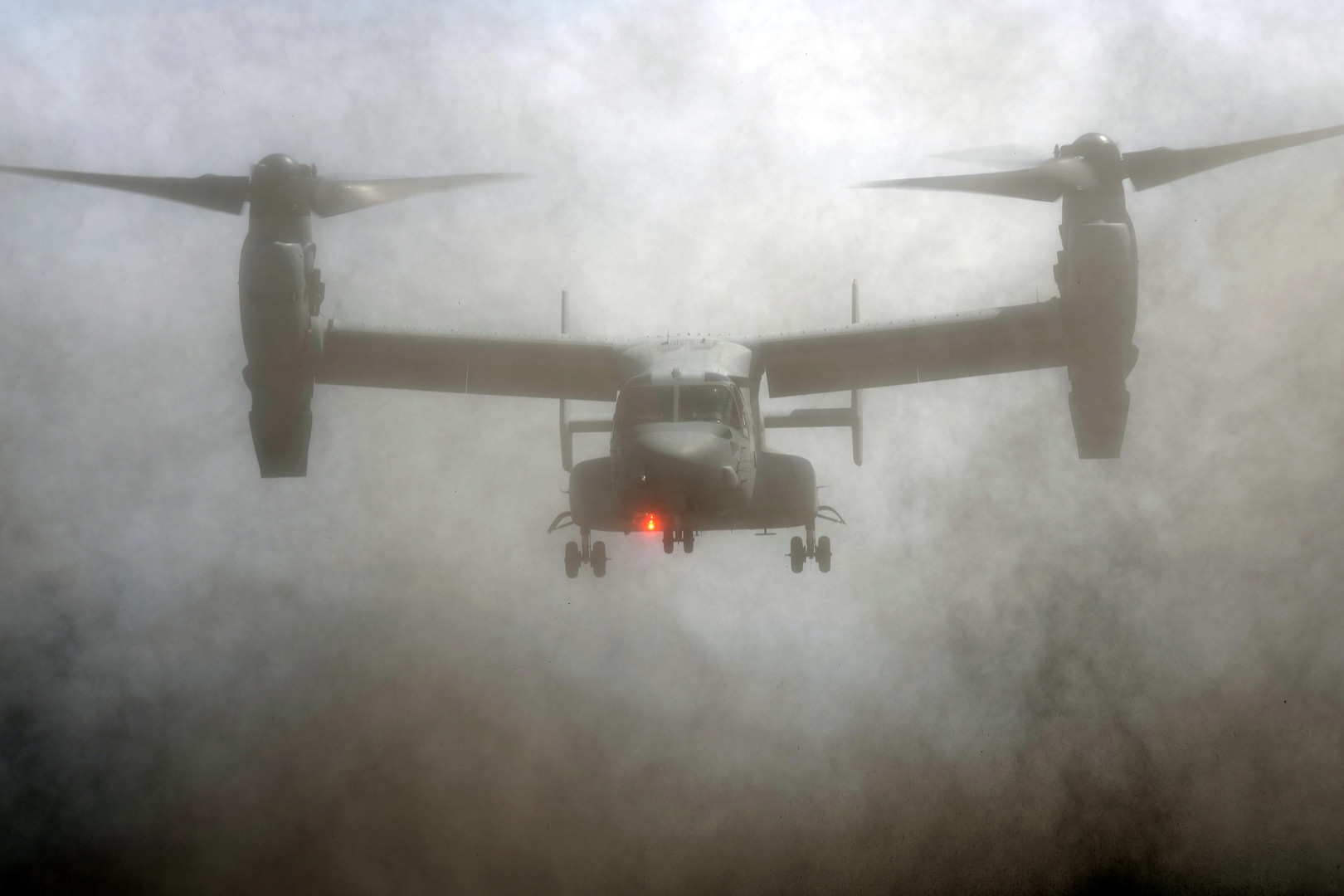
Four U.S. Marines were killed when their Osprey aircraft crashed in a Norwegian town in the Arctic Circle during a NATO exercise unrelated to the Ukraine war, authorities said Saturday.
Norwegian Prime Minister Jonas Gahr Stoere tweeted that they died in the crash on Friday night, March 18. The cause was under investigation, but Norwegian police reported bad weather in the area.
“It is with great sadness we have received the message that four American soldiers died in a plane crash last night,” the Norwegian prime minister tweeted. “Our deepest sympathies go to the soldiers’ families, relatives, and fellow soldiers in their unit.”
The Marines, assigned to 2nd Marine Aircraft Wing, II Marine Expeditionary Force, were taking part in a NATO exercise called Cold Response. The U.S. says their identities wouldn’t be immediately provided in keeping with U.S. Defense Department policy of notifying relatives.
The aircraft was an MV-22B Osprey. It “had a crew of four and was out on a training mission in Nordland County” in northern Norway, the country’s armed forces said in a statement.
It was on its way north to Bodoe, where it was scheduled to land just before 6 p.m. Friday. The Osprey crashed in Graetaedalen in Beiarn, south of Bodoe. Police said a search and rescue mission was launched immediately. At 1:30 a.m. Saturday, the police arrived at the scene and confirmed that the crew of four had died.