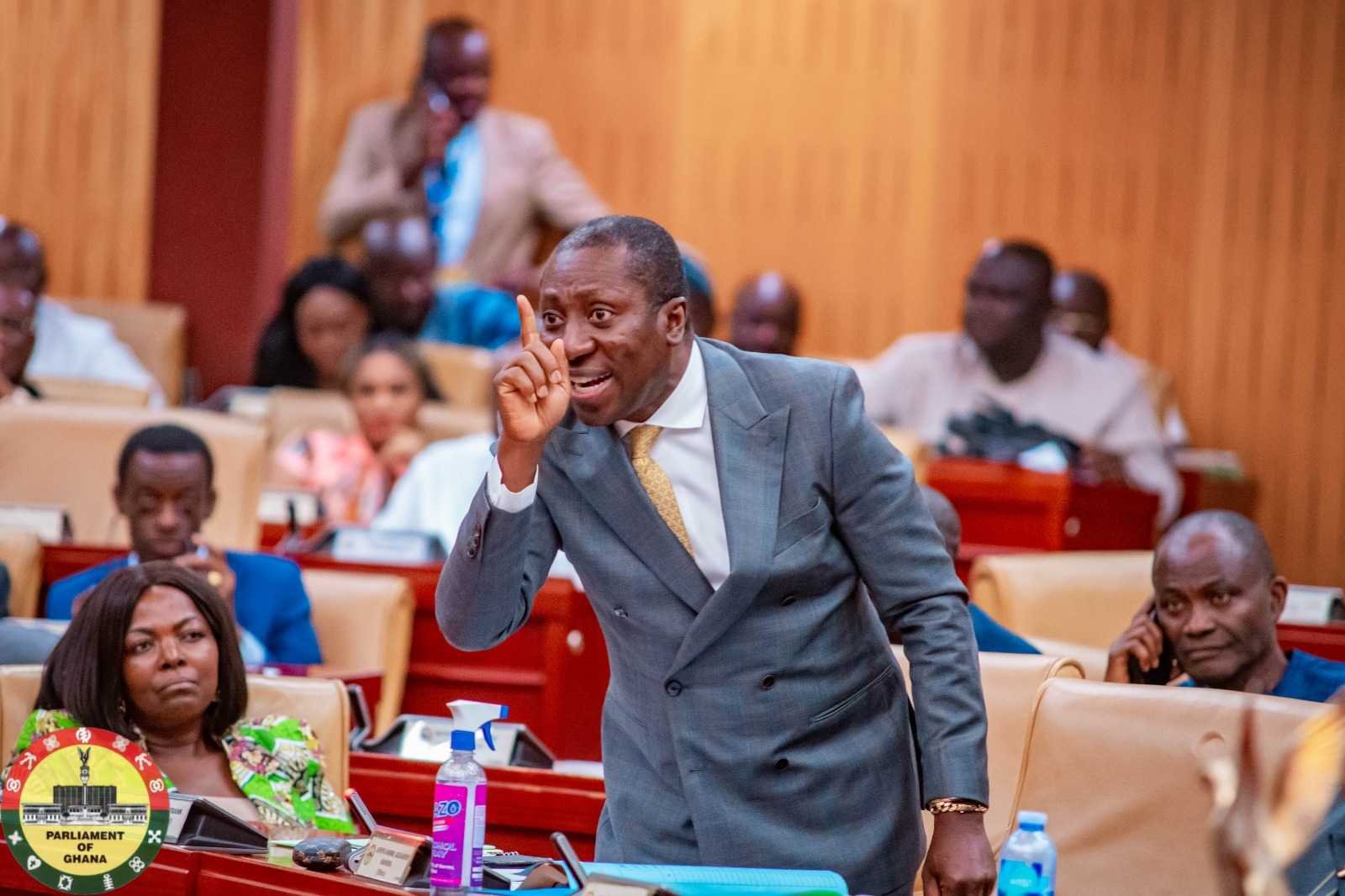
Solomon Owusu has criticised the apology issued by Minority Leader Alexander Afenyo‑Markin to Interior Minister Muntaka Mubarak, arguing that the statement does not amount to an admission that earlier allegations about fraud in the ongoing security service recruitment exercise were false.
Speaking on the Joy News AM Show on March 5, Owusu described the apology as a “big blow,” suggesting that the wording of the statement only addressed how the remarks were perceived rather than withdrawing the allegations themselves.
According to him, the Minority Leader’s message appeared to apologise for any offence caused by the comments rather than acknowledging that the accusations were inaccurate.
“From where I sit, it does not necessarily mean that he is admitting that he lied. He only said that if what he said pained people, then he apologizes,” Owusu explained during the interview.
Owusu argued that a proper apology should have directly addressed the earlier claim that the recruitment technology being used in the security services was fraudulent and placed financial burdens on applicants.
To illustrate his point, he noted that individuals can apologise for their tone or wording while still maintaining the substance of their claim.
“You can apologise for the words you used but still insist on the claim itself,” he stated, adding that the Minority Leader should have explicitly withdrawn the description of the recruitment system as a scam if the allegation was indeed incorrect.
He warned that the phrasing of the apology leaves room for future interpretation, suggesting that the Minority Leader could later maintain that he apologised only for the language used rather than the claim itself.
Owusu also expressed doubts about the effectiveness of parliamentary accountability mechanisms. He referenced an incident in November 2025 in which Afenyo-Markin was referred to Parliament’s Privileges Committee after the House resolved that he should no longer represent Ghana at the ECOWAS Parliament.
According to Owusu, such referrals rarely produce meaningful consequences.
He further cited a parliamentary vetting incident in which furniture was damaged, noting that despite earlier suggestions that those responsible would face salary deductions, no clear action was ultimately taken.
“At the end of the day, nothing came out of it,” he said.
Owusu also emphasised that Members of Parliament should prioritise the interests of their constituents above partisan loyalties.
He disclosed that steps are currently being taken to seek an interpretation from the Supreme Court on whether MPs, while serving in Parliament, represent the interests of their political parties or the citizens who elected them.