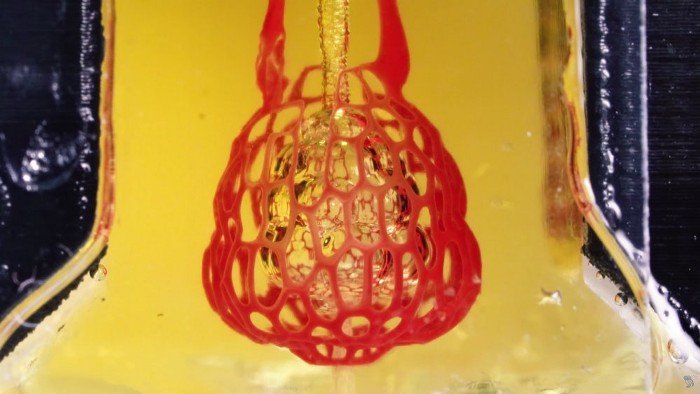
Researchers are working to improve 3D printing by overcoming hurdles that decrease printing efficiency, particularly with larger structures. A joint effort of several universities yielded a technique that improves the vascularization (formation of blood vessels) in printed tissues by utilizing food dye.
The technique allows researchers to label and track where the blood vessels and other functional structures would be located in the organs, improving the survival of the printed structures thereby overcoming a major hurdle [survival] of 3D tissue printing.
This is particularly important in organs like lungs, where different, overlapping vessels are required for the transport of blood and oxygen, with the dye helping to distinguish between them.
The researchers use the dye because it absorbs blue light, which is used to solidify the 3D printed layers of tissue. The dye helps visualize and print more detailed, complex structures that are often required for fully functional organs. With major organ shortages around the world, organ printing techniques are essential in helping alleviate the burden on the donor registries, where patients often wait years to receive life-saving transplants.