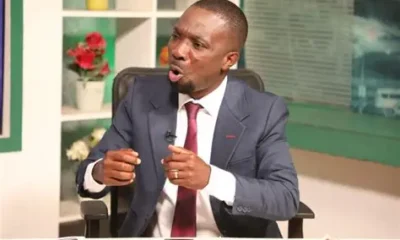
Security expert Paul Boateng has applauded the government for doing the needful by closing down the unregistered LGBTQ+ office in Tessano, a suburb of Accra.
According to him, the closure of the office is not because the government wants to infringe on the fundamental human rights of the LGBTQ+ community but it is preventing illegality.
He noted that Ghana just like many countries require every organisation to register with the Registrar Generals Department in order to function legally.
Explaining the closure of the LGBTQ+ office in Tessano on the HappyMorning Show with Samuel Eshun aired on e.TV Ghana and Happy FM, Paul said, “I think it is good that was done because in this country we work with laws and anything that goes against our laws must be corrected.
“To start any organization in Ghana, you need to register it and they didn’t do that”.
President Nana Addo Dankwa Akufo-Addo ordered for the swift closure of the LGBTQI office at Tesano in Accra amidst the raging controversy regarding its recent opening.
According to reports, a combined team of heavily armed police accompanied by armed National Security officials in mufti trooped the alleged LGBTQI premises and ordered all operations and activities to cease with immediate effect.
Additionally, all persons occupying the building were also asked to vacate the premises which was confirmed by an ardent critic of the LGBTQ community,
Moses Foh-Amoaning.