With all the early best practice and legal essentials, Ghana since 1998 when the guidelines in Affirmative Action were passed by the cabinet, has still not passed the bill into law.
Reasons given include low involvement and commitment by active stakeholders in the Country to push for its legislating.
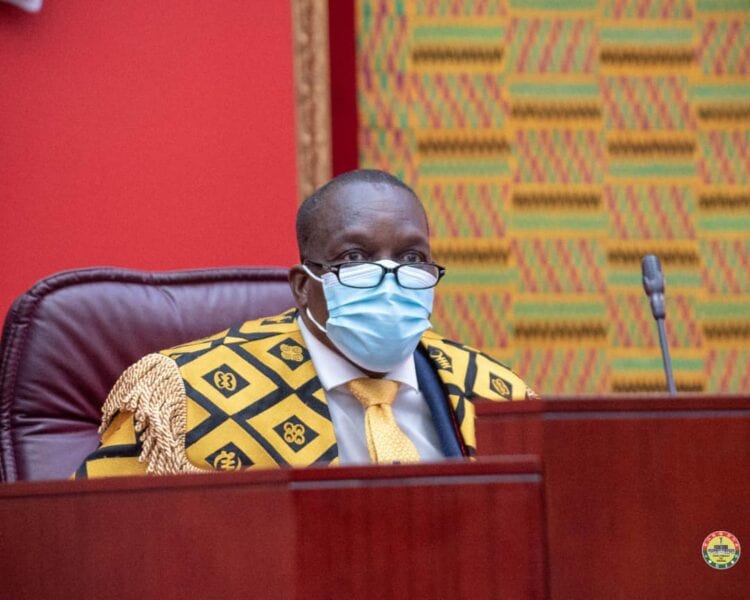
The Speaker of Parliament, Mr. Alban Bagbin however says the House would partner with all agencies of women development and civil society organizations to see the affirmative action bill through.
He was speaking at an IDEG and EU Women Conference on Strengthening Women’s Inclusion in Governance and the urgency of the affirmative action bill.
Ghana stands at 141 in global ranking in terms of women’s representation in parliament and 36 in Africa.
In local governance, the picture is more depressing as only 7 percent of the elected are women.
In terms of ministerial appointments for women, records show that Ghana has not fared any better – the figure being just as low as the local government representation.
This means Ghana does not meet, the minimum of 30 percent representation for women in governance set by the UN. Fortunately, in the current eighth parliament there are 40 women: NPP 20 and NDC 20, up from 38 in the seventh parliament.
This brings the percentage of women’s representation to approximately 14.5 percent, which is still very low on the global landscape.
According to the Executive Director of the Institute for Democratic Governance, IDEG, it is important for key actors to discuss the current context of women representation and participation in Governance, for the roadmap for Affirmative Action to be passed by the end of 2021 and also how relevant actors can work together to see the bill through.
The Speaker of Parliament, Mr. Alban Bagbin, said although the equitable participation of women in democratic governance is a collective responsibility, it behoves Parliament to enact the appropriate legislation to advance the goal of giving women their well-deserved place in leadership and governance.
Ghana is a signatory to the global frameworks and at the regional level, as well as the African Union’s Agenda 2063.
Ghana has also ratified the African Charter on Human and People’s Rights (1986) and the Maputo Protocol (2003) all of which seek to promote human rights and the empowerment of women.