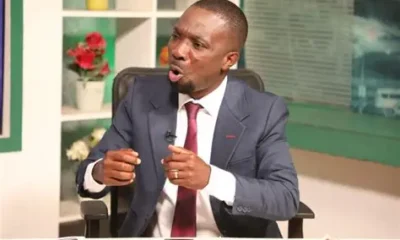
A senior economist at Databank Research, Courage Martey, says government must reduce its borrowing from the domestic market to limit crowding-out of the private sector.
His comments followed the release of data which showed that the central bank and the rest of the banking system held GH¢83.1bn of the country’s total domestic public debt as at the end of March 2021.
“Government will have to steadily scale down the borrowing because, at this rate, there is always a strong argument about a potential crowding-out effect. So on the grounds of that, I will argue for government to slow down in terms of the borrowing,” said Mr. Martey.
“Ultimately, government has to also work out its finances and reduce the need for borrowing from the open market so that the banks will have no option than to redirect this credit to the private sector,” he added.
Regarding the composition of the domestic debt, Bank of Ghana held GH¢34.8bn, whilst banks and deposit-taking institutions held GH¢48.3bn. This represented 50.5 percent of the total domestic public debt of GH¢164.5bn.
Commenting on the high Non-Performing Loans (NPLs) of the banks, Mr. Martey said: “We saw NPLs going up from 14.8 percent at the end of last year to 15.5 percent at the end of April. It means that the probability of loans taken not being repaid has gone up.”
In order to help the economy to rebound, the senior economist urged banks to find innovative ways to lend to the private sector by balancing credit risks and the need to maximise profit.