The phenomenon of tinting windows, both front and back has rapidly soared over the years in the country.
Many people tint their car windows for different reasons. While some may use it as a security measure to conceal the identity of a high-profile personality, others do so for aesthetic purposes.
In fact, it is not uncommon nowadays to see vehicles with such outlooks. Hit the streets at any time in the day, or night, and within a short while you will come across various vehicle types with their windows heavily tinted.
Officials of the Motor Traffic and Transport Department, MTTD. at the Ghana Police Service and Driver and Vehicle Licensing Authority, DVLA, have often tried to educate and accost individuals found in such practices.
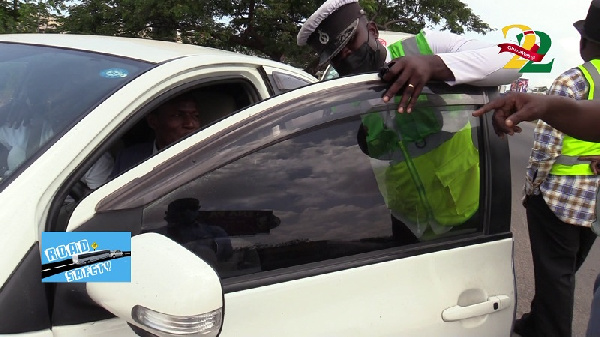
On Thursday, June 24, a compliance team comprising MTTD and DVLA personnel hit the streets of Awudome in Accra for random inspection of cars. Several drivers were found to be on the wrong side of the law.
The operation, led by deputy director for training, testing and licensing at the DVLA, Joseph Obosu, resulted in some drivers getting tinted front windows removed and cautioned.
Here’s what the law says about tinting car windows. According to L. I 2180 of the Road Traffic Regulations 2012:
(3) A person shall not drive a motor vehicle with a tinted front windscreen.
(4) A person may drive a motor vehicle which has glass other than the windscreen and front glass tinted with light transmittance of at least seventy per cent to allow the occupants to see and be seen, if
(a) the film or tinting material applied to the windscreen or window or partition is free from bubbles or tears or scratches; or
(b) the film or material applied to the windscreen or window has a textured surface or is a fixture or an attachment but does not reduce the visibility of the person driving the motor vehicle in any direction.
(5) Subregulation (3) does not apply to an ambulance, a hearse or a motor vehicle authorised by the Licensing Authority.
(6) A person who contravenes this regulation commits an offence and is liable on summary conviction to a fine of not less than twenty-five and not more than fifty penalty units or to a term of imprisonment of not less than thirty days and not more than three months or to both.