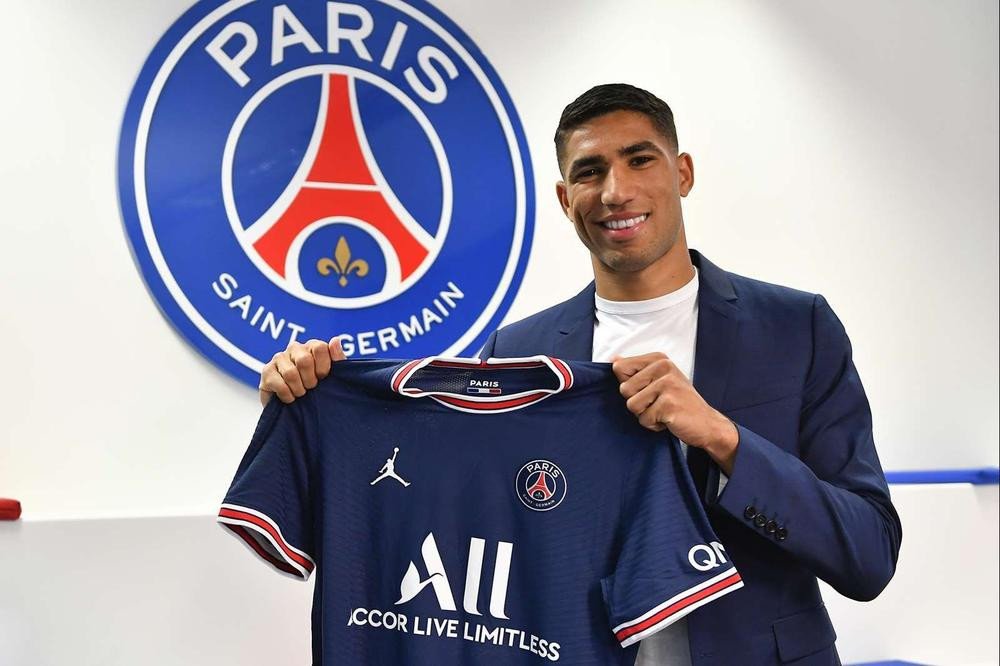
Paris Saint-Germain football club of France have completed the signing of full-back Achraf Hakimi from Inter Milan.
The Morocco international was signed on Tuesday, July 6, for €60 million (£52m/$71m), plus €10m (£9m$12m) in add-ons.
“I feel a great sense of pride today,” Hakimi told PSG’s official website.
“After Spain, Germany and Italy, Paris Saint-Germain offers me the chance to discover a new championship with one of the most prestigious clubs in the world.
“I can’t wait to meet my new team-mates, the fans and experience the incredible colour and passion inside the Parc des Princes.
“I share the same big ambitions as the coaching staff and my teammates and will do everything I can to deliver what is expected of me.”
Inter Milan’s CEO Giuseppe Marotta explained that the club’s dire financial situation meant they had no choice than to sell him.
He told Sky Italia: “Obviously, this is a painful moment for us, but I am an administrator who must guarantee the economic sustainability of the club during a difficult time for the world of football in general.
“Once the Hakimi operation is concluded, it will allow us to have a bit of breathing room and we really hope that we will no longer need to sell any other big players, as we want to maintain most of the squad that won the Scudetto.”
Hakimi made 37 appearances in all competitions for Inter during his one season at the club, helping them win the Serie A title.