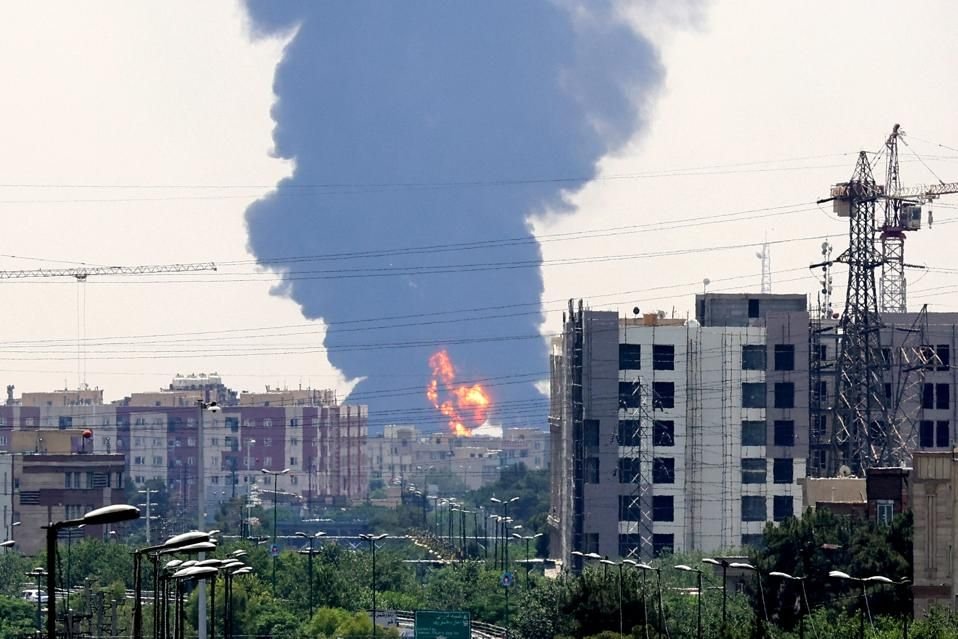
The recent bombings in Iran represent more than a regional military escalation. They signal a period of heightened geopolitical risk with measurable implications for global markets, energy security, and macroeconomic stability. From an African policy standpoint, this moment demands analytical clarity rather than emotional reaction.
The Middle East remains central to global energy flows. Approximately 20% of the world’s oil supply moves through the Strait of Hormuz, a narrow maritime chokepoint now exposed to escalating tension. Even without a full blockade, heightened risk alone can disrupt shipping insurance, reroute vessels, and drive speculative price increases.
Energy markets respond quickly to instability. Historically, sustained oil price increases of $10–$20 per barrel have translated into higher global inflation and reduced economic growth. Analysts project that if crude prices were to climb toward the $95–$110 range for an extended period, global inflation could rise by approximately 0.5–0.8 percentage points, while global GDP growth could weaken by 0.2–0.5 percentage points, depending on duration and intensity.
For advanced economies, this means tighter monetary policy and slower expansion. For many African economies, the implications are more acute.
Africa’s Structural Exposure
A significant number of African countries are net oil importers. Higher global crude prices translate directly into:
-
Increased fuel import bills
-
Widening trade deficits
-
Pressure on foreign exchange reserves
-
Currency depreciation
-
Rising food and transport costs
Energy costs feed into nearly every sector of the economy. Transportation inflation raises food prices. Manufacturing costs increase. Public transportation fares rise. The inflationary effect compounds quickly.
Even oil-exporting African countries are not insulated. While higher oil prices may temporarily boost export revenues, volatility disrupts fiscal planning and can distort exchange rates. Moreover, if global growth slows due to the conflict, demand for other African exports — minerals, cocoa, metals, and manufactured goods — may weaken.
Monetary and Fiscal Constraints
Many African economies are still navigating post-pandemic recovery challenges and elevated debt levels. With limited fiscal buffers, governments have reduced space to cushion consumers against energy shocks.
If inflation accelerates due to rising oil prices, central banks may be forced to tighten monetary policy. Higher interest rates would stabilize currencies, but at the cost of slower growth and more expensive debt servicing.
This is the policy dilemma: protect price stability or protect growth. Either path carries trade-offs.
Trade and Shipping Risk
Beyond oil, the Middle East is a major corridor for global shipping. Any disruption — even temporary — raises freight costs. During previous geopolitical shocks, shipping insurance premiums surged significantly, increasing global trade costs almost immediately.
For Africa, which remains heavily reliant on imported machinery, refined petroleum, pharmaceuticals, and industrial inputs, prolonged shipping disruption would increase supply chain fragility.
Escalation Scenarios
Is a global war inevitable? No.
However, escalation risk cannot be dismissed. The trajectory depends on three variables:
-
Whether retaliation cycles intensify
-
Whether regional powers are directly drawn into sustained confrontation
-
Whether diplomatic channels remain active
Modern alliance structures mean that localized conflicts can widen rapidly. Economic sanctions, proxy engagements, and cyber operations add further complexity.
The danger lies not in immediate global collapse, but in cumulative escalation.
Capital Flight and Investor Sentiment
Geopolitical instability typically triggers a shift toward safe-haven assets. Emerging and frontier markets often experience capital outflows during such periods. For African economies, this could mean:
-
Currency volatility
-
Increased sovereign borrowing costs
-
Reduced foreign direct investment
-
Weakened portfolio inflows
Even geographically distant nations feel the financial aftershocks.
Is the Fear of a Global Economic Crisis Valid?
From a macroeconomic standpoint, the concern is justified — but conditional.
A global economic crisis becomes more likely if:
-
Oil supply disruptions are prolonged
-
Shipping through key corridors remains constrained
-
The conflict expands regionally
-
Financial markets react with sustained risk aversion
If diplomacy prevails and tensions de-escalate quickly, market impacts may remain temporary.
However, structural vulnerabilities in the global economy — inflation fatigue, high debt burdens, and geopolitical fragmentation — mean that the system is less resilient than it was a decade ago.
Policy Priorities for Africa
Rather than panic, African policymakers should prioritize preparedness:
-
Accelerate energy diversification strategies
-
Strengthen regional trade under the AfCFTA framework
-
Build foreign exchange buffers where possible
-
Maintain credible monetary policy frameworks
-
Develop contingency plans for external shocks
Geopolitical instability is unpredictable. Policy readiness should not be.
The bombings in Iran are not simply another international headline. They are a reminder that in an interconnected world, economic shockwaves travel faster than missiles.
Africa cannot control the conflict. But it can strengthen its resilience.
-Charles Kofi Amoaku, the creator, is an editor and writer with a focus on geopolitics, economic policy, and African development.