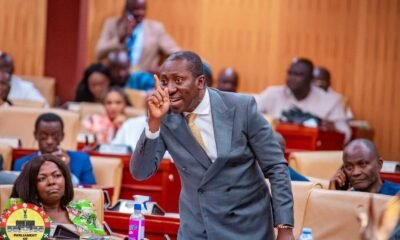
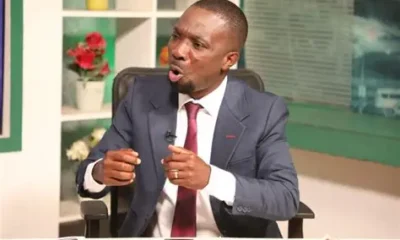
Dr Nana Ayew Afriyie, MP for Effiduase-Asokore, has stated that the government of Nana Addo Dankwa Akufo-Addo intends to stimulate the growth of the economy with taxation.
According to him, there is nothing wrong with the path government has taken because as a middle-income economy, the industries must lead with agriculture in tow.
“We intend to stimulate growth with taxation […] Mr Speaker, our economy as it is now, it is a middle-income economy and if you are in this middle income, the industry must lead, agric must be the last and service must follow,” he said while contributing to the discussion on the 2021 budget statement and economic policy of the government in Parliament on Tuesday.
Dr. Ayew Afriyie added, after Ghana first became an oil-producing country 10 years ago, “we have not seen industry-leading. Indeed, it was in Nana Addo Dankwa Akufo-Addo’s time that industry has taken its rightful place and if this 1D1F matures, we will see the transformation in that face.”
He further stated that Ghana is not like the United States where monitory policy can be used by the government to recover the economy after it was badly hit by the Coronavirus pandemic.
“Even if there will be a shake in the system, they can afford it [but] if we are going to do what we call quantitative easing, printing money like they have done in the US, you are going to be in a problem because you are more import-dependent economy,” he explained.
The 2021 budget statement and economic policy of the government proposed new taxes on petroleum products, 1% COVID-19 Health Levy on VAT Flat Rate Scheme and 1% on the National Health Insurance Levy (NHIL).
The government also introduced a financial sector clean-up levy of 5% on profit-before-tax of banks to help defray outstanding commitments in the sector.
Osei Kyei-Mensah-Bonsu, Minister for Parliamentary Affairs, who presented the 2021 Budget to Parliament last Friday in Accra on behalf of President Akufo-Addo, said this levy would be reviewed in 2024.
“The financial sector clean-up and the refund of monies to depositors have restored investor confidence and protected the hard-earned savings of millions of Ghanaians. However, this has come at a huge cost of over GH¢21.0 billion to the government,” he explained.