Some Ghanaians have over the years suffered from discrimination one way or the other; from racism to gender inequality, to being intersex, and declaring your love for the same sex.
People who have two sexual organs are sometimes discriminated against.
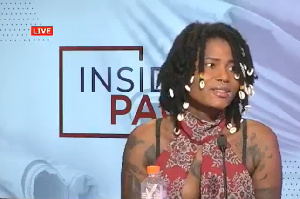
But in the case of Labena, she was loved by her family and the group of people she grew up with.
According to her, she was made to understand that having both the male and female reproductive organs was from God and that should not deter her from having a fun-filled life just like any other human being.
Narrating her story on Metro TV, monitored by GhanaWeb, she said, “I was born with it. I got to know I had both the male and female reproductive sex organ when I grew up. I was about 10 to 11 years when I noticed it. Then I was exposed to lots of things. I confronted my grandmother with it and her reply was its God’s creation so I should accept who I am.
“So I put that in my mind till date so I’m comfortable having 2 sexual organs. My siblings and family are cool with me being a hermaphrodite if not, they would have done something about when I was a child,” she stated.
Opening up about her sex life, she said her partner is okay with her and has not openly complained about her sex.
“I have sex with a man, I use my vagina. My partner is cool with it. He knows it is something that is not artificial but something that was created by God so he has no comments.”