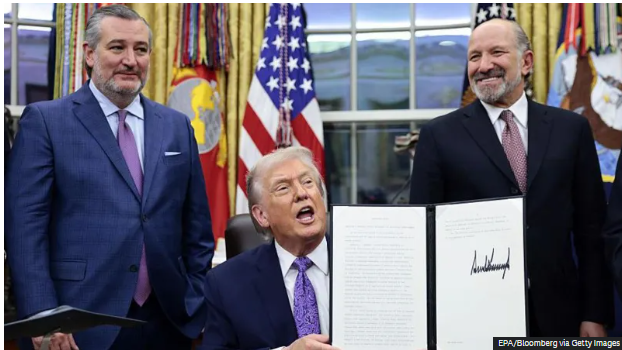
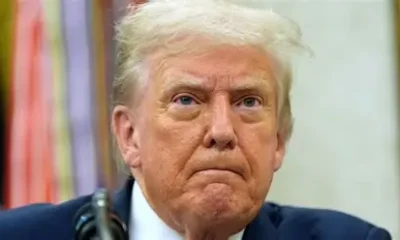
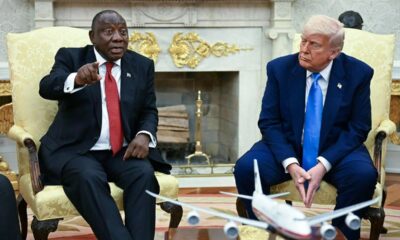
US President Donald Trump has signed an executive order that blocks individual states from enforcing their own artificial intelligence (AI) regulations, a move the administration says will establish a single national framework for overseeing the fast-growing technology.
“We want to have one central source of approval,” Trump told reporters in the Oval Office on Thursday.
White House AI adviser David Sacks said the order will help the administration push back against what it considers the most “onerous” state-level rules, though he noted that federal officials will not oppose regulations specifically aimed at protecting children.
The decision marks a major victory for technology companies, which have long argued that a fragmented system of state laws would slow innovation and weaken America’s competitive edge against China. AI firms are investing billions as they race for global dominance and have repeatedly urged Congress and the White House to adopt unified national standards.
The BBC has contacted OpenAI, Google, Meta, and Anthropic for comment.
California Leads Opposition
The order immediately drew strong criticism, especially from California — home to many of the world’s biggest tech firms and one of the few states with its own AI regulations.
California Governor Gavin Newsom issued a sharp response, accusing Trump of using federal power to benefit allies rather than protect citizens.
“Today, President Trump continued his ongoing grift in the White House, attempting to enrich himself and his associates, with a new executive order seeking to preempt state laws protecting Americans from unregulated AI technology,” Newsom said.
Earlier this year, Newsom signed a state bill requiring major AI developers to outline plans to limit potential harms from their models. Other states including Colorado and New York have also passed their own AI safety and accountability laws.
Newsom argues that these measures set a benchmark that federal lawmakers should emulate.
Critics Say States Need Power to Protect Residents
Advocacy groups also condemned the order. Julie Scelfo of Mothers Against Media Addiction warned that limiting state authority removes critical safeguards in the absence of strong federal oversight.
“Stripping states from enacting their own AI safeguards undermines states’ basic rights to establish sufficient guardrails to protect their residents,” she said.
Michael Goodyear, an associate professor at New York Law School, acknowledged the challenges created by differing state rules but cautioned that national regulation only works if federal lawmakers craft robust protections.
“It would be better to have one federal law than a bunch of conflicting state laws. However, that assumes that we will have a good federal law in place,” he noted.
Tech Lobby Welcomes Federal Action
Industry groups, however, applauded Trump’s decision. NetChoice, a major tech lobby, said national standards offer clarity and consistency for companies trying to innovate.
“We look forward to working with the White House and Congress to set nationwide standards and a clear rulebook for innovators,” said Patrick Hedger, the group’s policy director.