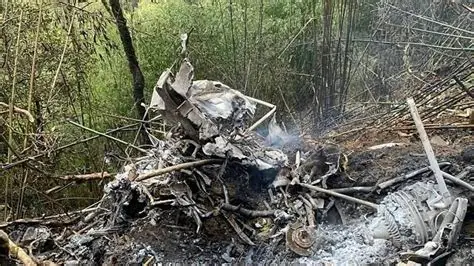
A Ugandan military helicopter crashed and caught fire at the main international airport in Somalia’s capital, Mogadishu, killing five people on board.
The pilot, co-pilot and flight engineer survived with “serious injuries and severe burns”, Ugandan military spokesman Maj Gen Felix Kulaigye said, adding that an investigation into the cause of the crash was under way.
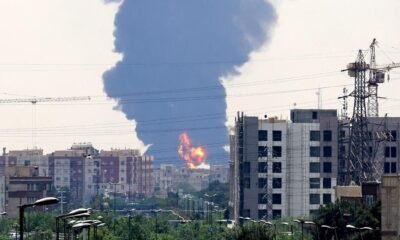
“We heard the blast and saw smoke and flames over a helicopter. The smoke entirely covered the helicopter,” Farah Abdulle, one of the staff at the airport, told Reuters news agency.
Somalia’s state-run news agency reported that the fire was quickly contained by the emergency services at the Aden Adde International Airport.
Ugandan troops are part of an 11,000-strong African Union (AU) force helping the government fight the al-Qaeda-linked al-Shabab group, which has been waging a brutal insurgency in Somalia for more than two decades.
The helicopter that crashed had been conducting a “routine combat escort mission”, Maj Gen Kulaigye said, without giving further details.
The head of the Somali Civil Aviation Authority, Ahmed Maalim, told the BBC that the helicopter had come down in the airport’s military section after flying in from the Balidogle airbase in the Lower Shabelle region, about 90km (56 miles) north-west of Mogadishu.
The crash delayed the departure of a Turkish Airlines passenger plane, but domestic flights continued to operate normally.