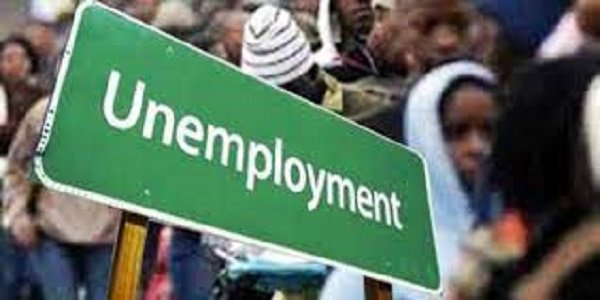
Unemployment is shaping up as Ghana’s most pressing risk in 2026, overshadowing easing inflation and short-term price stability, according to the World Economic Forum’s Global Risks Report 2026.
Rather than signalling a full economic turnaround, the report suggests that recent macroeconomic improvements have failed to deliver broad-based employment, especially for Ghana’s rapidly growing youth population. Business leaders surveyed under the Executive Opinion Survey 2025 expressed concern that job creation remains disconnected from economic recovery.
Economists warn that this disconnect could have far-reaching consequences. Persistent unemployment weakens household purchasing power, dampens consumer spending, and limits productivity growth, creating conditions that heighten both economic fragility and social tension.
Beyond labour market pressures, the report flags technological disruption—particularly artificial intelligence—as Ghana’s second-largest risk. While digital tools promise efficiency and innovation, the WEF notes that the pace of adoption may be outstripping the country’s readiness in skills training, regulation and workforce transition.
Without deliberate investment in reskilling and effective governance frameworks, automation could displace workers faster than new opportunities are created, potentially deepening inequality and labour market instability.
Strains on public services and social protection systems also feature prominently in Ghana’s risk profile. Health care, education, transport infrastructure and pension schemes remain under pressure at a time when fiscal consolidation limits government spending, even as population growth and urbanisation increase demand.
The report further links economic vulnerability to declining health and well-being, warning that weaker health outcomes translate into lower labour productivity and higher costs for households, reinforcing existing economic pressures.
Although inflation has moderated from previous highs, it continues to appear among Ghana’s notable risks, reflecting lingering sensitivity around the cost of living and uncertainty for long-term business planning.
Overall, the World Economic Forum argues that addressing these challenges will require Ghana to pivot away from short-term stabilisation and focus instead on employment-driven growth, sustained human capital development, and the delivery of resilient public services capable of supporting inclusive economic progress.