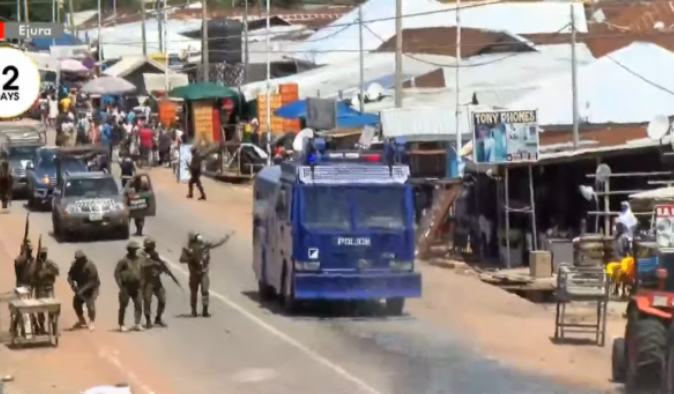
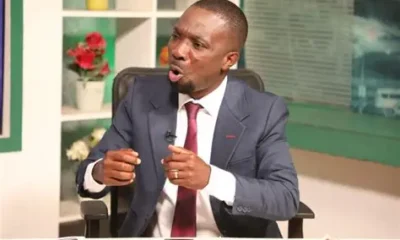
Ejura Kontihene, Odiasempa Antwi Obugyei II has condemned the military shooting at unarmed civilians at Ejura Sekyeredumase in the Ashanti region on Tuesday, June 29.
He said the military could have used rubber bullets or fired warning shots to disperse the angry crowd instead of using live bullets.
The Kontihene described the action of the military men on Tuesday as unprofessional.
Reacting to the killing of some protestors at Ejura on Monday, Odiasempa Antwi Obugyei II in an interview with CitiNews said, “…there was this army vehicle that was also coming and the youth were pelting them with stones.
“I believe that provoked them (soldiers) to also open fire. It was unfortunate, but I think they could have used rubber bullets to disperse them or better still, fired warning shots. But they fired live bullets into a group of people, and it was not professional.”
He called on government to look into the matter for justice to be served to the bereaved families.
He also wants the perpetrators to be brought to book to serve as a deterrent to other miscreants.
“For me, it was too extreme. We want the government to come to our aid to find justice for us. We want those who killed Kaaka dealt with and who instructed the military to open fire,” he added.
The late Ibrahim Muhammed died on Monday, June 28, 2021, after he was attacked by a mob.
According to reports, he was using social media to make the government unpopular.