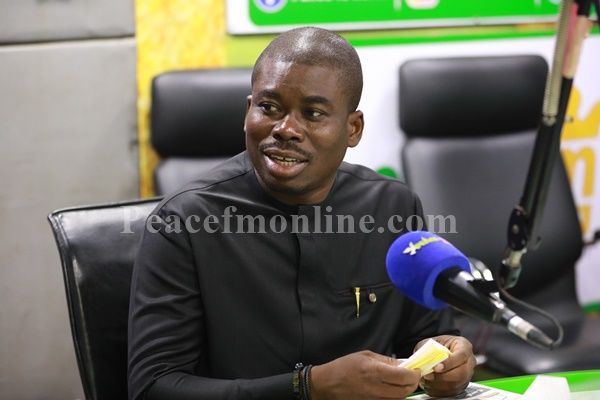
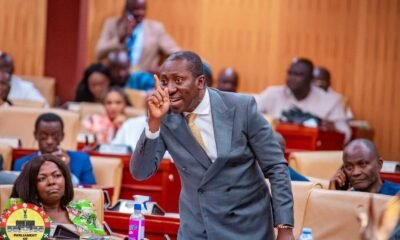
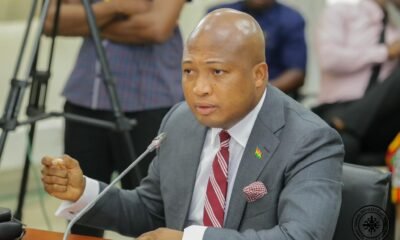
Former Head of Monitoring Unit at the Forestry Commission, Charles Owusu is disappointed in Ghanaians for objecting to the remuneration for First and Second Ladies.
According to Prof. Ntiamoa-Baidu Committee, the First and Second Ladies are to receive salaries equivalent to a Cabinet Minister who is a Member of Parliament (MP) and equivalent to a Cabinet Minister who is not a Member of Parliament (MP) respectively.
But due to what she terms as “extremely negative opinions” from critics to portray her as a “self-serving and self-centered woman”, the First Lady returned GH¢899,097.84 of all her allowances from 2017 and the Second Lady will also refund a total amount of GH¢887,482.
Making his submissions on Peace FM’s ”Kokrokoo”, Charles Owusu believed the opposition against the President and Vice President’s spouses is born out of ”hatred and envy”.
Responding to critics who argue on grounds that the First and Second Ladies don’t deserve the salaries because they don’t work, Charles Owusu sought to find out the purpose of setting up offices for them if they have no official duty to the State.
”What are their offices for?”, he questioned.
To Charles Owusu, people don’t want the First Lady Rebecca Akufo-Addo and Second Lady Samira Bawumia to take salaries just because they envy them.
”This is all hatred…We must sit up and think about it again to remove the hatred and envy as well as the politics”, he said.