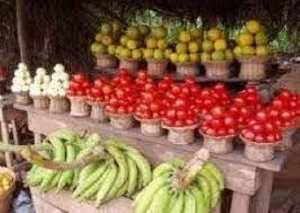
Prices of some foodstuff at major market centers in Tema Region have shot up, as residents express worry over the sudden price hikes, a weekly Ghana News Agency market survey has established.
The survey revealed that while the prices of some foodstuff registered a reduction during the current week as against the previous week, others saw a marginal increment.
At the Ashaiman, Tema Community One, Kpone and Ada markets, for instance, the price of commodities such as onions, maize, tomatoes, cassava, rice, wheat and pepper have been unstable.
The unstable prices of commodities have been attributed to the onset of rains, as well as the beginning of the current harvest season.
Prices of foodstuffs such as cassava, cocoyam and plantain that went high in previous weeks on the market have now dropped, marginally at the Kpone and Ada markets.
The price of yam remained high as compared to price levels that prevailed a couple of weeks ago. This has been attributed to the fact that the old stock is now running out of supply, whiles the newly harvested yam is also scarce and expensive.
Some market women explained that it was difficult to preserve perishable commodities like tomatoes and onions during the rainy season, hence the commodity often became slightly expensive during this time of the year.
The prices the women said would soon drop significantly because the onset of rains would also imply the harvest of abundant fresh foodstuffs.