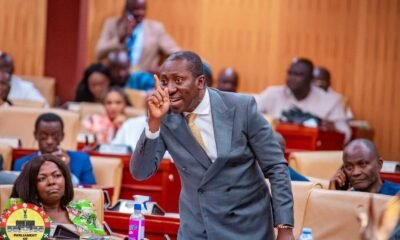
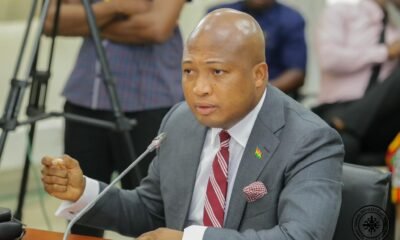
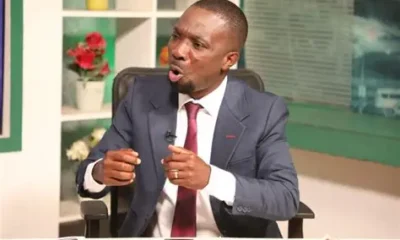
The Ashanti Regional Minister, Simon Osei-Mensah, on Tuesday, July 6, 2021, refused pleas by the three-member ministerial committee investigating the disturbances at Ejura, to disclose the identity of his informant who he claims had told him of a plot by the angry youth to set the District Police Station ablaze.
According to him, the identity of the informant has to be protected, since his disclosure will prevent other persons from giving him vital information in the region.
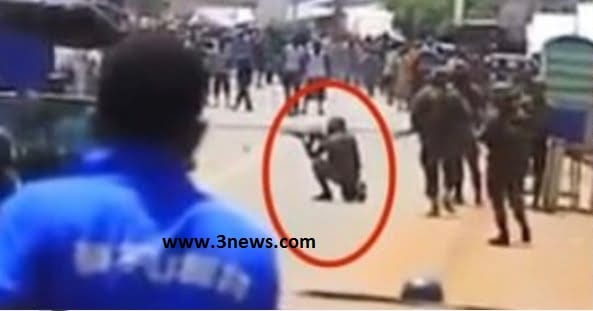
The Minister had said he requested the presence of the military in Ejura on Tuesday, June 29, 2021, as Chairman of the Regional Security Council, REGSEC upon an intel he gathered.
He maintained that he picked intelligence that the youth had planned to burn the Ejura District Police Station after the burial of social activist, Ibrahim Muhammed, alias Kaaka, who was killed by a mob.
But appearing before the Committee set up by the Interior Minister on the orders of the President to probe the incident, the Minister insisted that nothing will make him disclose the identity of the person who gave that information.
“My lord chair, if I bring the person, it is going to make my management of security in this region difficult. It would mean that all I want to say is that, nobody should give me information or intelligence again.”
“I have put all my numbers out there to the various radio stations that any time you have information, you can reach me on these numbers, and people voluntarily give me information and that is going to cease. I am afraid; it will seriously affect my management of security in this region.”
The Minister also defended his decision to request military presence in Ejura, saying he did that in accordance with the Security and Intelligence Agencies Act, Act 1030.
“I took this decision in line with the Security and Intelligence Agencies Act, Act 1030, and specifically section 5 that establishes the Regional Security Council [REGSEC], and section 6 that gives the membership of the council, and also makes the regional minister chairman of REGSEC, and section 7 that gives the function of REGSEC which include maintenance of peace and security in the region.”
Also, when asked whether the military should be prevented from assisting the Ghana Police Service in handling civil protests, he disagreed.
Mr. Osei-Mensah rather said the security agencies should be educated to collaborate with each other in such circumstances.
“I’ve used this strategy all this while. This is the first time we have casualties, and I think we should continue with it. But there must be more education and communication between the various security agencies as to how to act under such circumstances.”
About the Ejura disturbances
The violence occurred during protests that followed the death of a social media activist, Ibrahim Muhammed.
Ibrahim Muhammed, alias Kaaka, died after he was attacked by a mob on June 27 while returning home.
He’s believed to have been killed because he was critical of the government.
The 45-year-old was noted to be vocal on both local and national issues using his Facebook page.
Police in the Ashanti Region have since arrested three persons in connection with his death, including his brother, and put them before the court.
Ibrahim Muhammed was buried on Tuesday, June 29, 2021, alongside the two others who died in the protest.
Meanwhile, one of the four persons who also sustained gunshot wounds, a sixteen-year-old boy, has had one of his legs amputated at the Komfo Anokye Teaching Hospital.