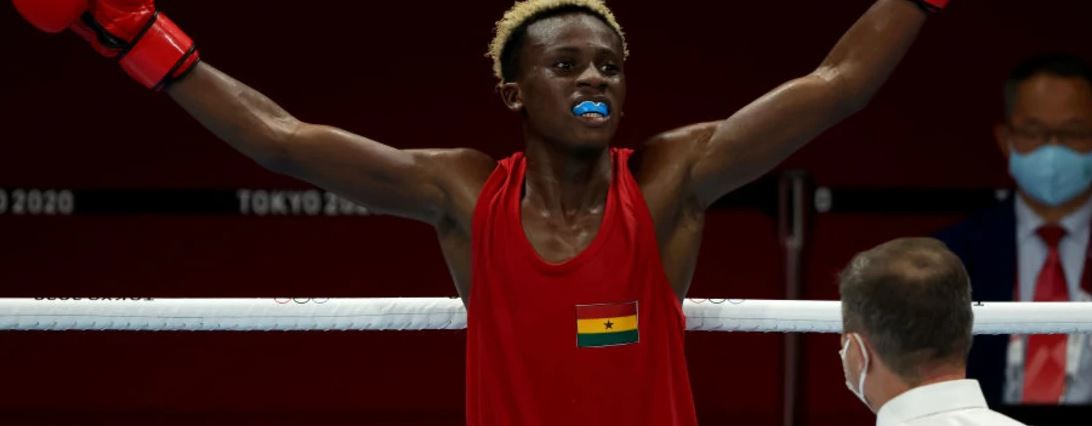
In an action-packed encounter of a 20-year-old Ghanaian boxer versus 32-year-old Colombian opponent, it was the Ghanaian who emerged the victor.
Samuel Takyi, Ghana’s young boxer defeated Colombia’s David Ceibar Avila to make the semi-final of the boxing event of the 2020 Olympic Games which guarantees him a medal, his country’s first Olympic medal in 29 years.
Yes, you read right, for the first time since the 1992 Games in Barcelona, a Ghanaian will mount a medal podium and it is thanks to no other person than Samuel Takyi.
The battle was far from an easy one for the young Ghanaian as his inexperience came to bear in the first round.
The 3-2 scoreline by the five-member referee panel is testament to how close the fight was but that is no longer relevant as Takyi can now pride himself in succeeding were dozens of athletes sent to the Olympic Games have failed to achieve since 1992.
The first round was for the Columbian who landed decent punches on Takyi but the Ghanaian having gleaned lessons from the opening round dominated the second and third rounds to keep his Olympic dream alive.
The rules governing boxing at the Olympic Games indicate that losers of the semi-final win bronze medal which means by virtue of making it to the semis, Takyi is a medalist.
He becomes the fourth Ghanaian after Clement Quartey – 1960- Silver, Eddie Blay – 1964- Bronze and Prince Amartey – 1972 – Bronze to win Ghana a medal at the Olympic Games.