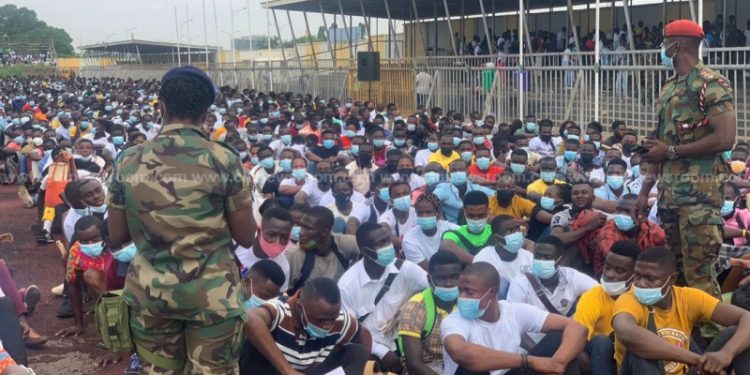
Chief Executive Officer (CEO) of the Atta-Mills Institute Koku Anyidoho has opined the huge number of youth who have stormed the El-Wak Stadium to participate in the Ghana Armed Forces recruitment exercise is due to unemployment.
A video and photos of the incident have gone viral, with Ghanaians expressing shock.
Others have suggested that the issue can be a time bomb, and leaders must address the situation.
Commenting on the issue, Koku Anyidoho said the youth in Ghana are angry about jobs hence the huge numbers we see.
Speaking on the ‘Frontline’ show on Rainbow Radio 87.5FM, he said there is lack of jobs and opportunities, there is hardship, and anyone who would disagree is not candid.
He called for a unified front in fixing the country devoid of politics.
“That is why we have to come together to fix the country. We have to unite our front and stop the partisan politics and fix the country.”
He also suggested the process is being done in the open to show a transparent and accountable process.
Meanwhile, he has asked the GAF to be transparent and allow only deserving persons to join the service to serve the nation.
He also said there are various reasons why people would want to join the security services but in all these, we would have to ensure that those who qualify, join the service.
“But the underlying factor is that they need jobs. Other things will kick in later but what the youth need now is a job,” he concluded.